July 15, 2026 · 7 min
Storylining Decks: Action Titles That Carry the Argument
A deck is not a stack of exhibits. It's one argument told across slides — and the titles alone should tell it.
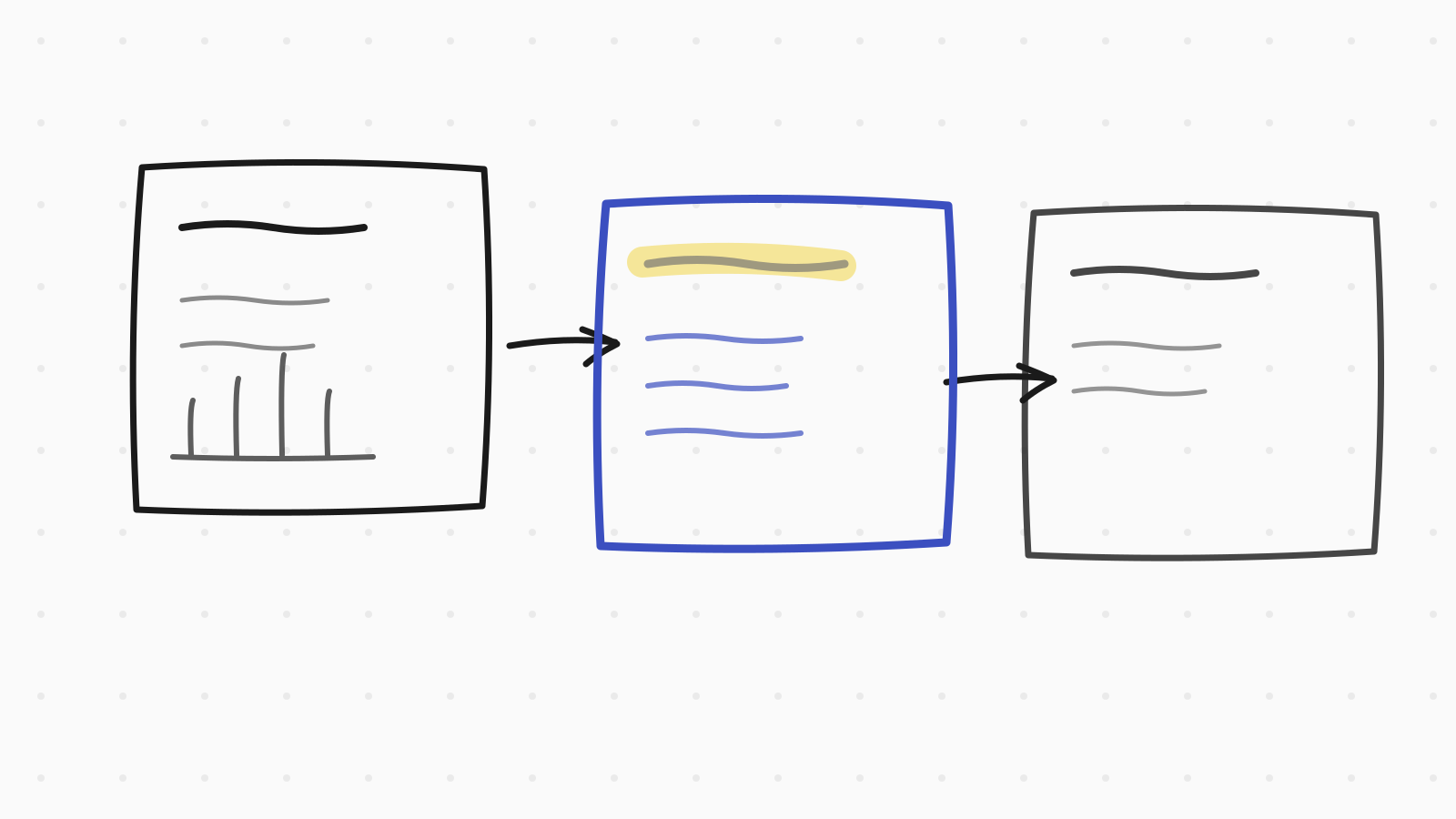
The Deck Is an Argument, Not an Archive
The most common deck failure isn't ugly slides — it's decks assembled as archives of the team's work. Every analysis earns a slide, slides get ordered by workstream, and the audience is left to assemble the argument themselves.
Consulting decks invert this. The argument comes first: one recommendation, supported by a sequence of claims, each claim carried by one slide. Analyses that don't serve a claim go to the appendix — no matter how much work they took.
- Slides exist to advance claims, not to display effort
- The audience should never wonder why a slide is in front of them
- The appendix is where good work that doesn't serve the story lives
Write the Titles Before the Slides
Storylining means writing every slide title before building any slide. Each title is a full sentence stating a claim: 'Premium-segment volume drove two-thirds of the decline.' Together, read in order, the titles must tell the complete story.
This is the cheapest quality gate in deck production. A broken storyline costs minutes to fix at the title stage and days to fix after the slides are built. Teams that skip it build beautiful slides into a structure that doesn't hold.
- Action titles are sentences with a verb and a 'so what'
- Titles like 'Market Overview' are placeholders, not titles
- Fix the storyline while it's still just text
The Horizontal-Flow Test
The classic quality check: cover everything except the titles and read the deck straight through. If the titles alone form a coherent, persuasive argument — situation, tension, answer, support, next steps — the storyline works. If there are gaps or repetitions, no amount of slide polish will save it.
The complementary check is vertical: on each slide, does the body actually prove the title's claim? A title that says 'costs are structural' sitting above a chart about revenue is a broken promise, and executives notice broken promises.
- Horizontal: titles read in sequence = the full argument
- Vertical: each slide's content proves exactly its own title
- Run both tests before formatting anything
One Slide, One Claim
Slides fail by ambition. Three messages on one slide means the audience picks one at random — or none. The discipline of one claim per slide forces prioritization and makes each slide's job unambiguous.
This also solves the layout problem before it starts: when a slide has one claim, the strongest single exhibit that proves it becomes the body. When a slide has three claims, it becomes a collage.
- If a slide needs two titles, it's two slides
- Choose the one exhibit that best proves the claim — cut the rest
- Density is not rigor; clarity is
Sequencing: Where the Answer Goes
For decision-oriented decks, the answer goes early — an executive summary slide that states the recommendation and the three reasons, before any evidence. The rest of the deck exists for verification, exactly like an answer-first document.
The suspense structure — evidence building to a final reveal — belongs to occasions where the audience must be brought along emotionally or where resistance is high and shared facts must be established first. That's a deliberate choice, not a default.
- Default: recommendation up front, evidence behind
- Save the reveal structure for hostile rooms, and use it knowingly
- Every section break should re-anchor the audience in the argument
From Analysis to Storyline, Faster
The practical workflow: finish the thinking first (the issue tree and the quant work), then draft the title sequence as plain text, then pressure-test the flow, and only then produce slides. Slide production becomes execution rather than exploration.
This is also where tooling pays off. If your analysis, documents and models live in one place, drafting a storyline from them — and regenerating slides when the argument shifts — stops being a copy-paste marathon and becomes a revision loop.
- Think → storyline → slides, strictly in that order
- Treat title drafts like code reviews: cheap to change, worth critiquing
- When the argument changes, change the storyline first, slides second