July 30, 2026 · 7 min
From Issue Tree to Workplan: Making Structure Executable
An issue tree tells you what could matter. A workplan decides who finds out, how, and by when. The translation between them is a core consulting skill nobody teaches candidates.
The Gap Between Structure and Work
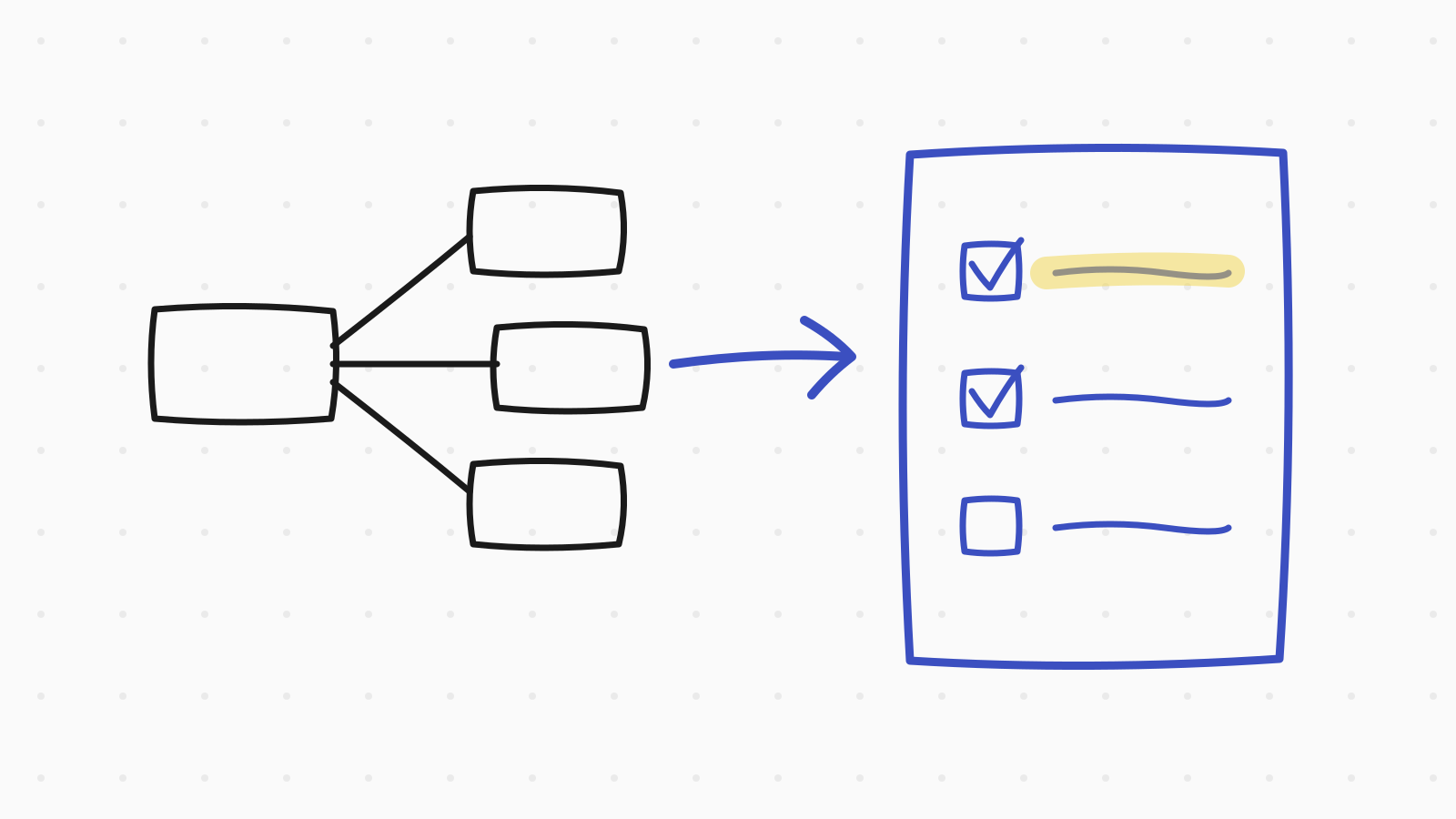
An issue tree decomposes the problem; it doesn't tell anyone what to do on Monday morning. The workplan is the missing translation: each promising branch becomes a hypothesis, each hypothesis an analysis, each analysis a data request, an owner, and a deadline.
This translation is where new consultants earn their keep in the first months, and increasingly where interviews probe—'you have two weeks and one analyst, what do you actually do?' is a workplan question wearing case clothing.
- Tree answers 'what could matter'; workplan answers 'who does what by when'
- The chain: branch → hypothesis → analysis → data → owner → deadline
- Real engagements—and final rounds—test the translation, not the tree
From Branch to Testable Hypothesis
A branch labeled 'pricing' is not workable. A hypothesis—'we price below key competitors in the mid-tier segment, leaving at least three points of margin on the table'—is, because it names what evidence would confirm or kill it.
The standard of a good hypothesis is falsifiability with available data. If no realistic dataset could disprove the statement, it's not a hypothesis yet; sharpen it until a specific analysis could embarrass it.
- Rewrite each priority branch as a claim that data could kill
- Include magnitude in the claim—'below market' beats 'pricing issues'
- If nothing could disprove it, keep sharpening
The Analysis Plan: One Line Per Hypothesis
For each hypothesis, one line: the analysis that tests it, the data it needs, the source of that data, who runs it, and when it lands. Consulting teams literally maintain this grid—often called an analysis plan or ghost pack—and review it weekly.
The discipline pays off in what it excludes. Any analysis that doesn't map to a hypothesis is orphaned work; any hypothesis without an analysis is an opinion with tenure. The grid makes both visible.
- Hypothesis, analysis, data, source, owner, date—one row each
- Orphaned analyses and untested hypotheses jump off the page
- Sketching the expected output chart first sharpens the request
Sequencing by Kill-Power
Order the work by which analyses can change the answer fastest. An analysis that could kill the leading hypothesis in two days outranks one that polishes a secondary branch for a week. This is 80/20 applied to sequencing: front-load the tests with the most decision-changing power.
Also front-load the longest data lead times. The classic engagement failure is discovering in week three that the critical dataset takes four weeks to obtain—a failure the workplan exists to prevent, and one a single early question ('what data is slow here?') usually avoids.
- Rank analyses by their power to change the recommendation
- Send the slowest data requests on day one
- Cheap, fast, decisive tests come before thorough, slow ones
Running the Plan Without Worshipping It
The workplan is a living document. Findings kill branches, open new ones, and reshuffle priorities; the weekly ritual is pruning the grid against what's been learned. A plan unchanged after two weeks of findings is a plan nobody is reading.
The counterweight is scope discipline: every new analysis added mid-stream should displace something, because the deadline doesn't move. 'What does this replace?' is the question that keeps workplans honest and teams sane.
- Prune the grid weekly against accumulated findings
- New work displaces old work—the deadline is fixed
- An unchanged plan after real findings is a warning sign
The Interview Version
When a case asks 'how would you actually study this?', the scoring answer has three parts: the two or three hypotheses you'd prioritize and why, the specific analysis and data for each, and the sequence with reasoning—decisive and slow things first.
Even unprompted, one workplan sentence elevates a structure: 'If we had two weeks, I'd start with the price-benchmark analysis, since it could settle the biggest branch in days.' It signals that your tree isn't a drawing—it's a plan waiting to run.
- Hypotheses, analyses, sequence—with the reasoning said aloud
- Volunteer one workplan sentence after presenting any structure
- It's the difference between describing a problem and attacking it